
The Apple ecosystem is a goldmine for app creators. With billions of active devices worldwide, getting your app onto the App Store is often the most critical step in a developer’s career or a company’s growth strategy. However, the gatekeeper to this ecosystem is the Apple Developer Account. While most developers sign up directly through Apple, a secondary market exists where accounts are bought and sold.
Navigating this secondary market is risky. It requires a keen eye and a strict adherence to safety protocols. If you are considering purchasing an existing account rather than creating a new one, you need to know exactly who you are dealing with. This guide explores why this market exists, the inherent risks, and how to identify a trustworthy seller to protect your investment and your code.
Why the Apple Developer Account Matters
Before diving into the complexities of buying an account, we must understand the asset itself. Apple Developer Account for sale is your passport to the App Store. It allows you to publish apps, access beta software, use advanced app capabilities like Apple Pay and iCloud, and view detailed analytics about your app’s performance.
Without this account, your software remains local. You cannot distribute it to the public, monetize it, or build a legitimate business around it. For enterprises, the Enterprise Program allows for the internal distribution of proprietary apps, which is crucial for operational efficiency. The account is not just a login; it is a verified identity within Apple’s walled garden.
Why Buy an Account Instead of Creating One?
You might wonder why anyone would buy an account from a third party when they can register directly with Apple for a standard annual fee. While direct registration is the recommended path, specific business scenarios drive demand for existing accounts.
Avoiding Verification Delays
Apple’s verification process can be rigorous. For individual developers, it is usually straightforward. However, for organizations—especially those in specific regions or with complex corporate structures—the process can drag on for weeks or even months. Businesses that need to launch an app immediately to capitalize on a trend or meet a deadline often cannot afford this wait. Buying a pre-verified account offers an instant solution.
Access to Older Accounts
There is a belief in the developer community that older, “aged” accounts carry more trust weight with Apple’s algorithms. While Apple does not officially confirm this, many developers feel that apps uploaded from established accounts face fewer scrutiny hurdles or random suspensions compared to brand-new accounts.
bypassing Regional Restrictions
Some developers reside in countries where Apple’s payment processing or verification systems face hurdles due to sanctions or banking limitations. For talented coders in these regions, buying an account registered in a supported region is sometimes the only way to participate in the global app economy.
Transferring App Portfolios
Sometimes, buying an account isn’t about the account itself, but the apps inside it. Investors or larger companies often buy developer accounts to acquire a portfolio of revenue-generating apps. This is essentially a business acquisition, where the account transfer is the mechanism of the deal.
Key Factors to Consider in a Reliable Seller
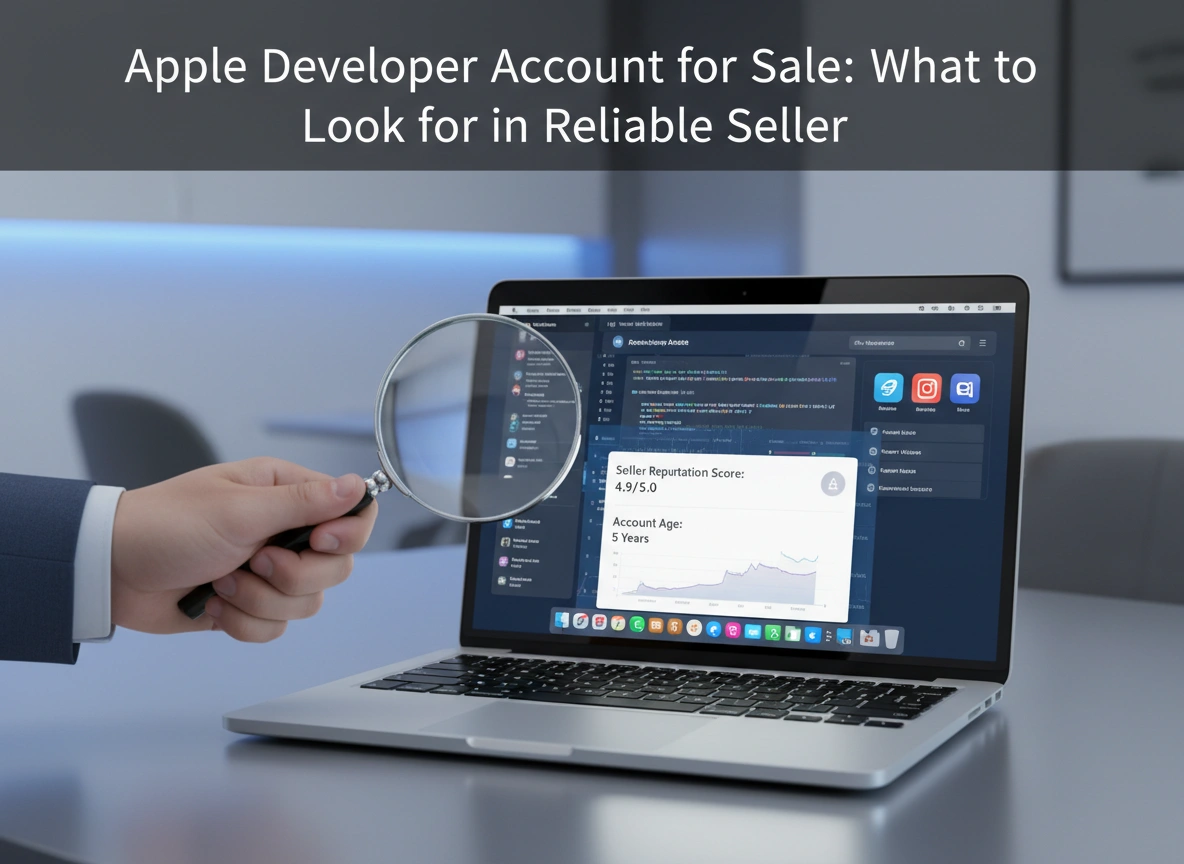
If you determine that buying an account is necessary for your business strategy, the next step is vetting the seller. The market is rife with scammers, so due diligence is non-negotiable. Here is what you must scrutinize.
1. Legitimacy and Track Record
A reliable seller should have a digital footprint. Are they a known entity on developer forums? Do they have a website, or are they just a random username on a chat app?
- Look for history: Avoid sellers who created their profiles yesterday.
- Verify contact methods: Legitimate sellers usually offer professional communication channels, not just anonymous encrypted messaging.
2. Verified Reviews and Testimonials
Social proof is your best friend. Look for reviews on third-party platforms that the seller cannot control.
- Forum Reputation: Check specialized forums like BlackHatWorld or specific coding communities. If a seller has a sales thread, read through the comments. Look for complaints about accounts being banned shortly after purchase.
- Detailed Feedback: Generic reviews like “Good seller” are easy to fake. Look for detailed accounts of the transaction process.
3. Clear Pricing Structure
If a deal looks too good to be true, it is. Apple charges $99/year for a standard account and $299/year for an enterprise account. If someone is selling a “verified” account for $50, they are likely selling a hacked or stolen account that Apple will shut down immediately.
- Market Rate: Expect to pay a premium over the standard Apple fee. You are paying for the verification effort and the age of the account.
- Transparency: A reliable seller lists their prices clearly and explains what that price includes (e.g., email access, phone number transfer, associated documents).
4. Post-Sale Support and Guarantees
What happens if the login credentials don’t work? What if Apple flags the account for suspicious activity a week later?
- Replacement Policy: A top-tier seller often provides a replacement warranty for a specific period (e.g., 24-48 hours) if the account is non-functional upon delivery.
- Documentation: They should be willing to provide guidance on how to safely take over the account without triggering security flags.
Risks and Red Flags to Watch Out For
The dangers of buying a developer account are significant. You risk losing your money, your app, and your reputation.
Stolen or Hacked Accounts
This is the most common risk. Hackers steal credentials from legitimate developers and resell them. When the original owner recovers the account, you lose access instantly. Worse, if you uploaded an app, you might face legal action for unauthorized access.
Red Flag: The seller refuses to give you the recovery email associated with the Apple ID.
Accounts Linked to Banned Apps
Some sellers try to offload accounts that are already on Apple’s “watch list” because they were used to publish spam or malware. Once you upload your clean app, the account gets terminated because of its past history.
Red Flag: The seller refuses to show the account history or the “Resolution Center” status inside App Store Connect.
The “Enterprise” Scam
Enterprise accounts are highly sought after because they allow app distribution outside the App Store. However, Apple strictly polices these. Scammers often sell “Enterprise” accounts that are actually just standard accounts, or Enterprise accounts that are days away from revocation due to misuse.
Red Flag: Sellers offering Enterprise accounts for cheap prices. These accounts are incredibly difficult to get and carry a very high market value.
Tips for Ensuring a Secure Transaction
You can minimize risk by following strict safety protocols during the purchase.
Use Escrow Services
Never send direct crypto payments or wire transfers to a stranger without protection. Use a reputable escrow service. The escrow holds your funds and only releases them to the seller once you have confirmed you have full control of the account.
Demand Full Control
You are not just buying a password; you are buying an identity. You must receive:
- The Apple ID and Password.
- The answers to security questions.
- Access to the associated email address.
- The recovery phone number (or the ability to change it immediately).
- Any 2FA (Two-Factor Authentication) backup codes.
Check the Account Health Immediately
Before releasing funds from escrow, log in and check:
- Membership Details: Confirm the expiration date and program type.
- Agreements, Tax, and Banking: Ensure there are no pending legal blocks.
- App Status: Check if any apps were previously rejected for fraud.
The “Warm-Up” Period
Once you buy the account, do not upload 50 apps immediately. Change the credentials, update the recovery info, and let the account “rest” for a few days. Drastic changes followed by immediate high-volume activity can trigger Apple’s fraud detection systems.
Conclusion
Buying an Apple Developer Account is a strategic maneuver that carries distinct advantages for specific business needs, particularly regarding speed and access. However, it operates in a grey area that demands extreme caution.
The difference between a successful acquisition and a total loss lies in the quality of the seller. By prioritizing transparency, demanding full access control, and using secure payment methods like escrow, you can navigate this secondary market safely. Remember, the goal is to build a sustainable app business. Starting that journey with a compromised or fraudulent account is a foundation built on sand. Always perform your due diligence, and when in doubt, walk away.
